

When an insurance claim involves significant property damage, multiple parties or questions about the cause of loss, getting the facts right can be more complicated than it first appears. Photographs and repair invoices may show what has happened, but they do not always explain why it happened, what should be covered, or how much the resulting loss is reasonably worth.
This is where a chartered loss adjuster Australia can provide valuable independent expertise. Loss adjusters investigate the circumstances surrounding an insured event, assess the extent of damage and help establish a clear, evidence-based understanding of the loss.
For insurers, brokers, businesses and other stakeholders, a professional assessment can make complex claims easier to understand and support more defensible decisions.
Why can complex property claims require specialist investigation?
Not every insurance claim needs the same level of investigation. A straightforward incident may be resolved with photographs, invoices and a basic assessment. More complicated losses can require considerably more work.
For example, a major water loss may involve building materials, contents, temporary accommodation, business interruption and questions about the original source of the water. Similarly, storm damage may require an assessment of whether the observed damage is consistent with the reported event or whether pre-existing deterioration has contributed.
A professional loss assessment looks beyond the visible damage. It considers the circumstances of the incident, available evidence, policy requirements, repair scope and financial impact.
This structured approach can help separate confirmed facts from assumptions and provide stakeholders with a clearer basis for decision-making.
What does a chartered loss adjuster actually assess?
The role goes well beyond inspecting damaged property.
Depending on the circumstances, an experienced adjuster may review photographs, documents, invoices, maintenance records, engineering information, witness accounts and relevant policy wording. A site inspection may also be required to document the condition of the property and identify the likely cause and extent of damage.
The assessment can involve several important questions:
- What caused the loss?
- When and how did the incident occur?
- Which areas or assets have actually been affected?
- Is there evidence of pre-existing damage or deterioration?
- What repairs are reasonably required?
- Are the proposed costs supported by the available evidence?
- How does the loss relate to the applicable policy terms?
The answers need to be supported by evidence rather than assumptions. This is particularly important when a claim is large, technically complex or disputed.
How do loss adjusting services support better claim outcomes?
Good loss adjusting is fundamentally about clarity.
An effective investigation creates a structured record of what happened, what was damaged and what is required to address the loss. This may involve on-site inspections, photographic documentation, discussions with relevant parties, policy analysis, scope development and cost validation.
For insurers and underwriting organisations, this information can help control exposure and make more informed decisions. For businesses and property stakeholders involved in a claim, an independent assessment can provide a clearer understanding of the technical issues affecting the matter.
The objective is not simply to produce a report. It is to establish a defensible assessment that can withstand scrutiny.
What role do insurance loss adjusters Perth play in property claims?
Perth and Western Australia experience a wide range of property-related insurance events, including storms, flooding, fire, impact damage and other incidents affecting residential and commercial buildings.
In more complicated matters, local knowledge can be valuable, but technical independence is equally important. Insurance loss adjusters Perth may be required to coordinate information from property owners, insurers, contractors, engineers and other specialists while maintaining an objective assessment of the loss.
This is particularly relevant for commercial properties, strata buildings, rental properties and larger portfolios where several areas of responsibility may need to be considered.
For example, a strata loss can involve questions around common property, individual lots and responsibility for particular repairs. A detailed investigation helps establish the factual position before conclusions are reached.
How is property loss assessment Australia different from a basic damage inspection?
A damage inspection generally focuses on identifying visible physical damage. A broader property loss assessment Australia involves looking at the circumstances and financial dimensions of the loss as a whole.
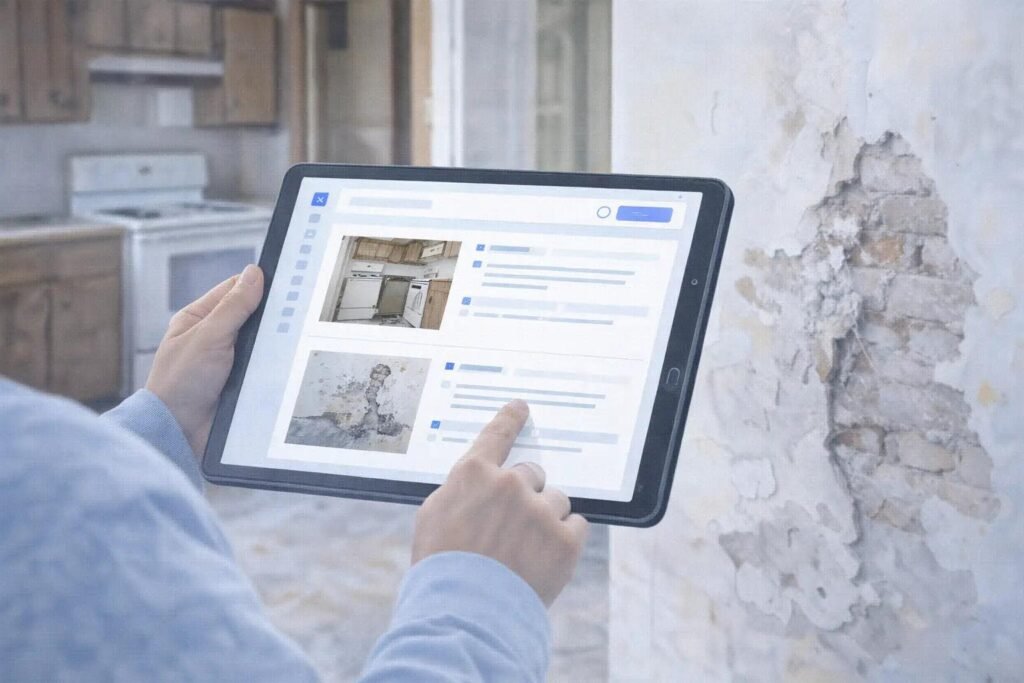
Consider a commercial building affected by a significant water event. A basic inspection might identify damaged flooring, plasterboard and fixtures. A more comprehensive assessment may also examine the source of the water, the extent of consequential damage, the required repair methodology, mitigation measures and the reasonableness of proposed costs.
The distinction matters because the most visible damage is not necessarily the complete loss.
A professional assessment therefore combines physical evidence with documentation and technical analysis. Where appropriate, specialist engineers, builders or other experts may also contribute to understanding particular aspects of the event.
When should an independent loss adjuster be considered?
An independent assessment can be particularly useful when a claim involves substantial financial exposure, conflicting accounts or technically difficult questions.
It may also be appropriate where the cause of damage is uncertain, repair costs appear disproportionate, several parties are involved or the property has suffered repeated incidents.
For example, determining whether cracking resulted from a recent event or gradual movement may require more than a visual inspection. Likewise, machinery breakdowns and construction-related losses can require specialist investigation to identify the underlying cause.
The earlier the relevant evidence is collected, the easier it can be to establish a reliable record of the event.
How does Lead Claims approach complex loss investigations?
Lead Claims uses a structured investigation process that can include physical inspection, photographic evidence, verification with relevant parties, policy wording analysis, scope development and cost validation. The approach is designed to produce clear and defensible outcomes rather than relying on assumptions.
The business supports residential, commercial, strata, construction, engineering and machinery-related matters, with both on-site and desktop assessment options depending on the complexity of the loss.
For complex matters, this combination of technical investigation and evidence-based reporting can help stakeholders understand the actual circumstances surrounding a claim.
What should you look for when choosing a loss adjusting professional?
Experience is important, but it should not be the only consideration.
Look for a professional who can demonstrate technical knowledge, independence, strong investigative methods and the ability to explain complex findings clearly. Reporting should be evidence-based and sufficiently detailed to allow the reader to understand how conclusions were reached.
It is also worth considering whether the provider has experience with the particular type of loss involved. Residential water damage, a commercial fire, machinery breakdown and a construction loss can require very different investigative approaches.
Most importantly, the assessment should remain objective. A credible report should distinguish between established facts, professional observations and matters that require further investigation.
Frequently Asked Questions
What is a chartered loss adjuster?
A chartered loss adjuster is a professionally qualified specialist who investigates insurance losses and assesses their cause, extent and financial implications. Their work can involve property inspections, evidence gathering, policy analysis and detailed reporting.
When is a loss adjuster needed for an insurance claim?
A loss adjuster can be particularly useful when a claim is complex, high-value, technically challenging or involves uncertainty about the cause or extent of damage. Their investigation can provide an independent and structured assessment of the circumstances.
What types of property losses can be assessed?
Loss assessments can cover events such as fire, smoke, storm, rain, flooding, water damage, impact, theft and accidental damage. More technical assignments can also involve construction, machinery and equipment failures.
Can loss adjusting be completed remotely?
Yes. Desktop or virtual assessment can be suitable for lower-complexity matters where a physical inspection is not necessary. More complicated losses may require an on-site investigation to properly document the damage and collect evidence.
Why is independent assessment important?
Independence helps ensure that conclusions are based on evidence rather than assumptions or the interests of a particular party. A well-supported assessment can give stakeholders greater confidence when reviewing the circumstances and financial impact of a loss.
Conclusion
Complex insurance claims require more than an estimate of repair costs. They require a clear understanding of what happened, why it happened, what has been affected and what the evidence supports.
A suitably qualified chartered loss adjuster Australia can bring together investigation, technical assessment, documentation and financial analysis to provide a clearer picture of a loss. Whether the matter involves residential property, commercial premises, strata, construction or specialist equipment, a structured approach can help reduce uncertainty and support more informed claim decisions.
When the facts are properly established from the outset, everyone involved is better positioned to understand the claim and move towards a fair, evidence-based outcome.